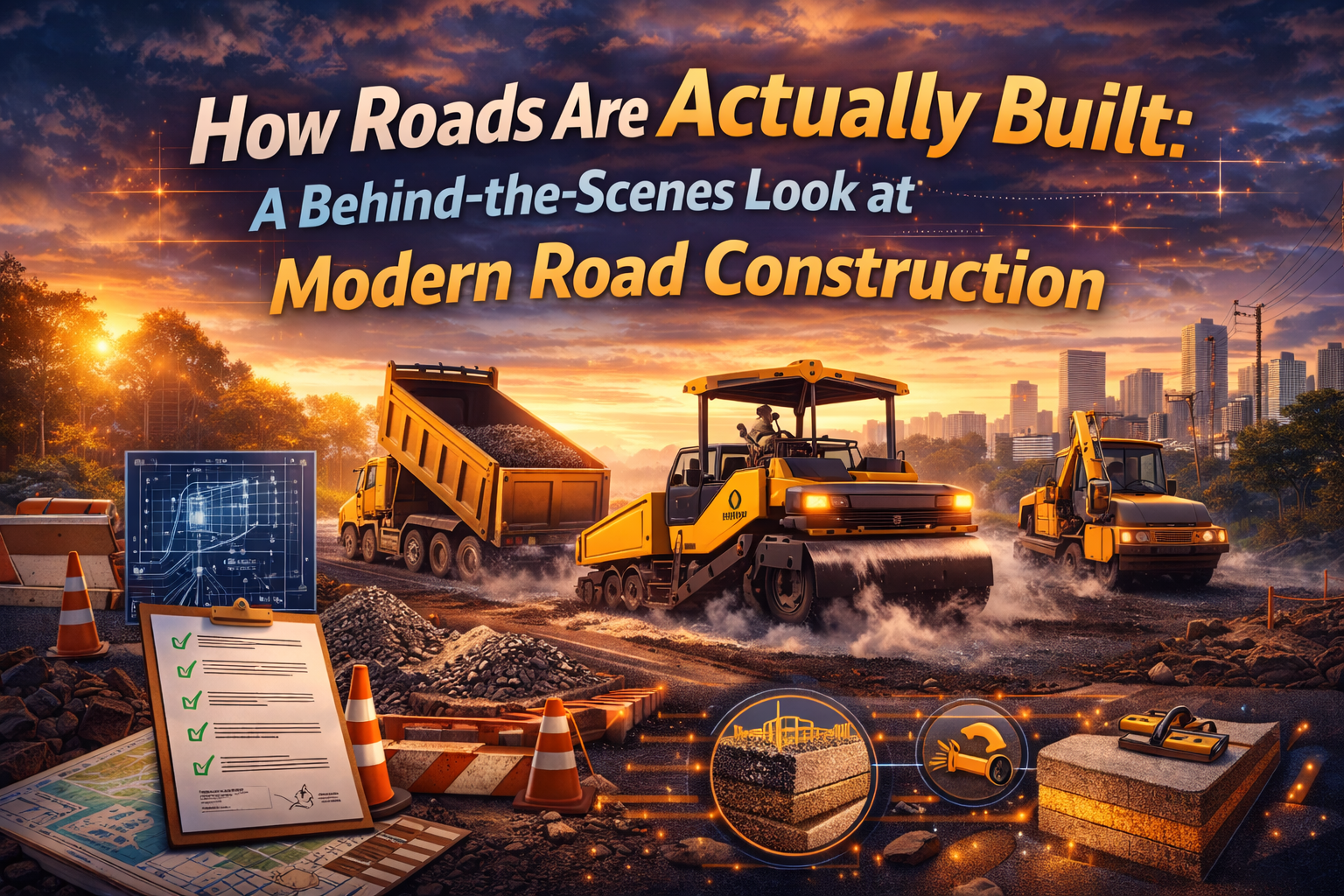
Every time you drive down a smooth stretch of pavement, you’re rolling over months (sometimes years) of planning, engineering, and heavy labor. Most people never think twice about what’s under their tires but road construction is one of the most technically demanding processes in the entire construction industry. It’s not just “pour some asphalt and call it a day.” It’s a carefully orchestrated sequence of phases where a single mistake early on can cost hundreds of thousands of dollars down the road.
Whether you’re a curious driver, a property developer, or someone planning a commercial project, here’s a clear look at how modern roads actually come together and why the process matters more than most people realize.
It All Starts Long Before the First Shovel Hits the Ground
Road construction begins with planning, and this phase alone can stretch anywhere from a few months to several years depending on the scope of the project. Engineers evaluate traffic volume, soil conditions, drainage patterns, environmental impact, and how the road will connect to existing infrastructure.
During this stage, surveyors map the exact alignment of the road. Designers use CAD software and 3D modeling to plan grades, curves, and elevations in increments as small as 50 feet accounting for drainage, utilities, and geotechnical conditions along the way. Permits are pulled, utility companies are notified, and funding is secured. If the project touches protected land or existing structures, environmental reviews and relocation plans get added to the mix.
Skipping or rushing this phase is where most failed road projects start to fail.
Site Clearing and Earthwork: Shaping the Land
Once planning is finalized, crews move in to clear the site. Trees, vegetation, old pavement, and any existing structures are removed. Topsoil is usually stripped and stockpiled for later rehabilitation work along the shoulders.
Then comes the cut-and-fill process arguably the most important earthwork step. Motor graders (often equipped with GPS guidance) scrape soil from high points and redistribute it to low points, creating a level, properly sloped base. This is where the road’s skeleton gets shaped. The slope matters enormously because it determines how water drains off the finished surface. Poor grading equals standing water equals premature pavement failure.
This is also the stage where hidden problems tend to surface: underground streams, unexpected bedrock, soft soil pockets. An experienced Road construction company Allentown property owners rely on will have seen these surprises before and know how to pivot without derailing the timeline.
Building the Foundation: Subgrade and Base Layers
Here’s something most people don’t realize the asphalt you see on top is actually the thinnest part of the road. The real strength comes from what’s underneath.
After grading, the subgrade (the native soil) is compacted to handle load. On top of that goes a sub-base layer of granular material chosen specifically to resist swelling, shrinking, and freeze-thaw cycles. Next comes the aggregate base course, usually crushed stone, which gets compacted with vibratory rollers until it hits the required density.
These layers do two critical jobs: they distribute the weight of traffic across a wider area so the subgrade doesn’t crack under pressure, and they create drainage channels so water doesn’t pool beneath the pavement. A road with a weak or poorly drained base will show cracks, ruts, and potholes within just a few years no matter how good the top layer looks on day one.
Flexible vs. Rigid Pavement: Two Ways to Finish a Road
Once the base is ready, the road gets its surface and there are two main approaches.
Flexible pavement uses asphalt, typically in multiple layers. The binder course goes down first, followed by the surface course. Asphalt is about 95% aggregate and 5% bitumen binder, and it’s laid hot, then compacted immediately while it’s still pliable. Flexible pavements handle temperature changes well and are cheaper upfront, which is why they’re the dominant choice for most American roads.
Rigid pavement uses concrete slabs over a thin granular base. It costs more to install but lasts longer and needs less maintenance, making it popular for high-traffic highways and airport runways.
The choice depends on traffic load, climate, budget, and how long the road needs to last. There’s no universally “better” option just the right option for the job.
Finishing Touches and Quality Control
After paving, the job isn’t done. Line striping, signage, guardrails, reflective markers, and drainage features all get installed. Then comes inspection: density tests, smoothness measurements, thickness verification, and drainage checks. Good contractors test at multiple points throughout construction, not just at the end, so problems get caught and fixed before they’re buried under a finished surface.
Why the Process Matters to You
Here’s the bottom line whether it’s a highway, a commercial parking lot, or a private access road, the quality of a road is determined by the steps you don’t see. A beautiful-looking surface over a bad foundation is a ticking clock. A modest-looking road built on a properly engineered base can last 20 to 30 years with routine maintenance.
That’s why the companies that do this well aren’t just pouring asphalt. They’re managing soil science, drainage engineering, materials testing, traffic control, and project logistics all at once. It’s complicated work, but when it’s done right, you’ll never have to think about it. You’ll just drive.
And that’s kind of the point.